

Australia’s Skilled Occupation Lists play a crucial role in the country’s immigration system. These lists highlight professions currently in demand across various sectors of the economy. Employers use them to sponsor overseas workers, while skilled visa applicants assess their eligibility. In this post, we’ll explore the key aspects of these lists, their purpose, and how they impact visa applications. You can read more about these lists here
What Are the Skilled Occupation Lists?
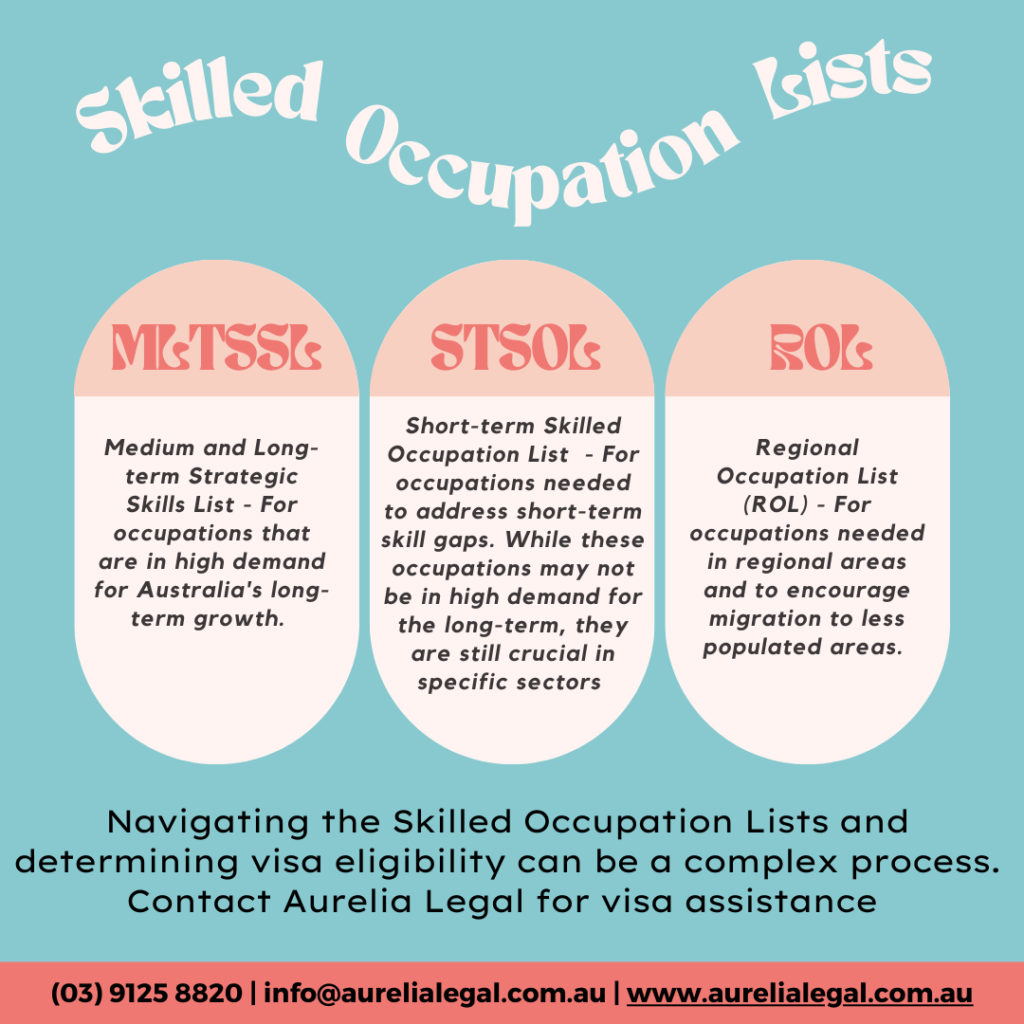
Australia maintains several Skilled Occupation Lists, each designed for different visa types. The main lists include:
Medium and Long-term Strategic Skills List (MLTSSL)
The MLTSSL includes occupations that are vital for Australia’s long-term growth. Professions on this list are eligible for a broad range of visas, such as the 189 Skilled Independent Visa, the 190 Skilled Nominated Visa, and the long-term stream of the 482 Temporary Skill Shortage Visa. Occupations like engineers, IT professionals, and healthcare workers are commonly found here.
Short-term Skilled Occupation List (STSOL)
The STSOL covers jobs needed to fill short-term skill gaps. These professions are crucial for specific sectors, though they may not be in long-term demand. The list is mostly used for temporary visas, such as the short-term stream of the 482 Visa and the 494 Skilled Employer-Sponsored Regional Visa. Common occupations include chefs, marketing specialists, and hospitality workers.
Regional Occupation List (ROL)
The ROL focuses on jobs needed in Australia’s regional areas. These occupations qualify for the 491 Skilled Work Regional Visa and the 494 Visa, encouraging migration to less populated regions. Examples of professions include teachers, agricultural scientists, and nurses.
How Are the Lists Updated?
The Australian Government regularly updates the Skilled Occupation Lists based on economic needs. They work closely with industry bodies and stakeholders to identify areas of skill shortage. Updates can reflect changes in labor market conditions or economic trends. For instance, during the COVID-19 pandemic, the need for healthcare professionals surged, leading to the addition of more healthcare-related roles on the MLTSSL.
How Do These Lists Affect Visa Applications?
Each visa has its own requirements regarding which occupation list you need to meet:
- The 189 Skilled Independent Visa requires an occupation on the MLTSSL.
- The 190 Skilled Nominated Visa applies to occupations on both the MLTSSL and STSOL, provided you are nominated by an Australian state or territory.
- The 491 Skilled Work Regional Visa accepts occupations listed on the MLTSSL, STSOL, or ROL. Applicants must live and work in designated regional areas.
- The 482 Temporary Skill Shortage Visa has both short-term and long-term streams, requiring occupations from either the STSOL or MLTSSL.
- The 186 Employer Nomination Scheme (ENS) Visa requires the nominated occupation to be on the MLTSSL or STSOL, depending on the stream.
In addition to having the right occupation, applicants must meet other eligibility criteria, such as skills assessments, points test scores, and English proficiency. Your work experience and qualifications must closely match the occupation, as most visa subclasses require formal verification from a relevant authority. Read more about the 482 and 186 visa here
Conclusion
Australia’s Skilled Occupation Lists are essential to the country’s migration program, guiding both visa applicants and employers. By understanding which occupations are in demand and how they relate to various visa subclasses, you can better plan your migration journey.
Navigating these lists can be complex. At Aurelia Legal, we offer personalized guidance to help individuals and employers understand how these lists apply to their specific situations. Whether you’re seeking to migrate to Australia or fill skill shortages, we’re here to simplify the process and help you succeed.
Contact us at +61 3 9125 8820 or info@aurelialegal.com.au