

In today’s competitive job market, employers often face challenges in finding the right talent to meet their business needs. For employers seeking to sponsor foreign workers in Australia, a critical step in the process is Labour Market Testing (LMT). This blog will explore what LMT is, why it is required, and how businesses can conduct effective LMT to navigate the sponsorship process. Read more here.
What is Labour Market Testing (LMT)?
Labour Market Testing (LMT) is a process used by businesses to demonstrate that local workers are unavailable for a specific role before hiring a foreign worker. In the context of the Skilled Migration visa or Temporary Skill Shortage (TSS) visa in Australia, LMT is a crucial part of the process for businesses seeking to hire a skilled overseas worker. The purpose of LMT is to ensure that businesses first attempt to find suitable local talent before considering applicants from abroad.
It is essentially a way for businesses to show that they have made genuine efforts to recruit Australian citizens or permanent residents, but have been unable to find suitable candidates, thus justifying the need to hire a foreign worker. LMT is usually required when applying for certain skilled visa programs, like the Temporary Skill Shortage (TSS) visa, Subclass 482.
Why LMT is Required
LMT serves several important purposes within the sponsorship framework:
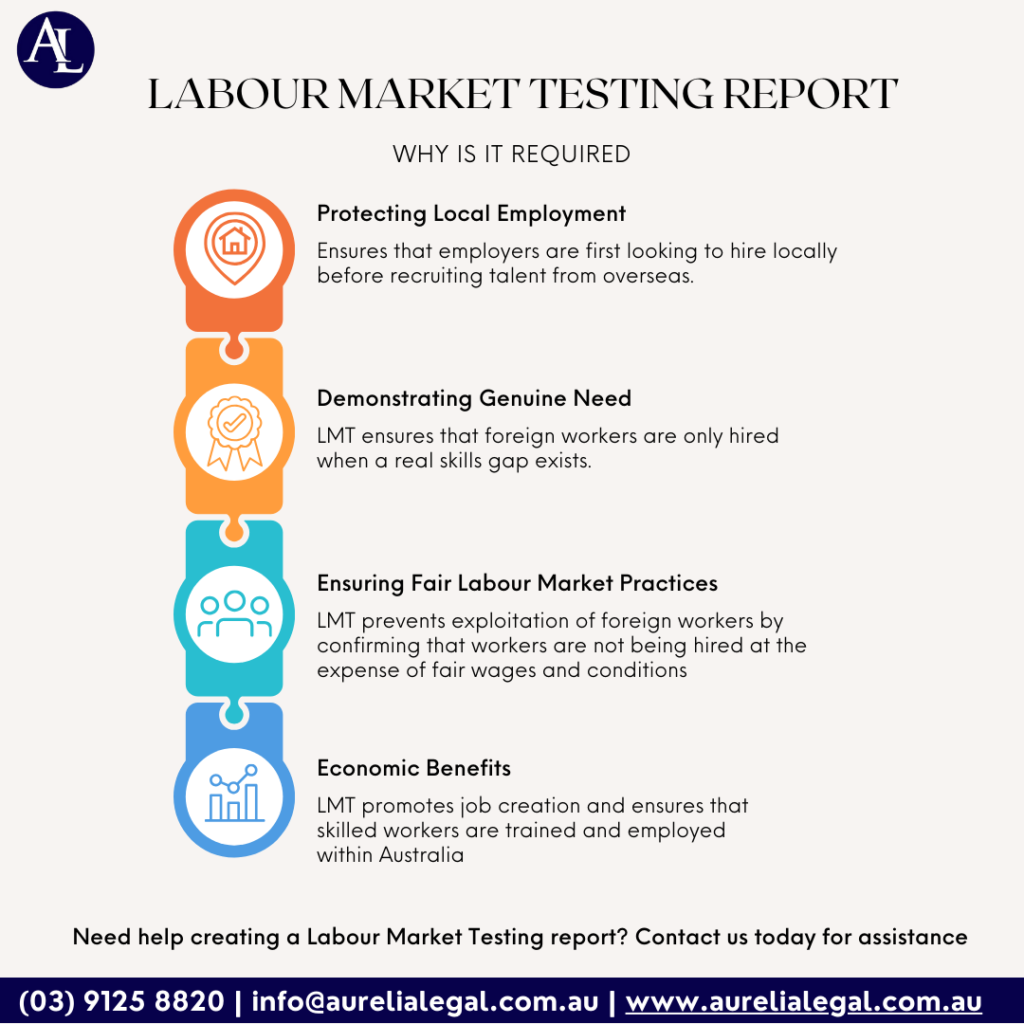
- Protecting Local Employment: The primary purpose of LMT is to protect Australian workers by ensuring that employers are first looking to hire locally before recruiting talent from overseas. This helps safeguard job opportunities for the local workforce.
- Demonstrating Genuine Need: The Australian Government requires employers to demonstrate that they have exhausted local recruitment options and that the job cannot be filled by local workers. LMT ensures that foreign workers are only hired when a real skills gap exists.
- Ensuring Fair Labour Market Practices: LMT is also a way to prevent exploitation of foreign workers. By confirming that employers are making efforts to find local candidates, the system ensures that foreign workers are not being hired at the expense of fair wages and conditions for Australian workers.
- Economic Benefits: By prioritizing local workers, LMT promotes job creation and ensures that skilled workers are trained and employed within Australia. It helps support the Australian economy by ensuring that local talent is nurtured and utilized.
The Benefits of LMT Compliance
Complying with LMT requirements comes with various benefits for businesses:
- Smooth Visa Application Process: LMT plays a pivotal role in the success of your application for a skilled worker visa. By meeting LMT requirements, businesses can avoid delays or rejections from immigration authorities.
- Access to a Broader Talent Pool: Once LMT has been conducted and proven that local talent is unavailable, businesses are allowed to tap into a global pool of skilled professionals. This ensures that businesses are not limited to local candidates and can fill critical roles efficiently.
- Support for Skilled Workforce Development: Engaging in LMT practices demonstrates a commitment to local workforce development. By actively searching for local talent, businesses contribute to the growth of the Australian labor market.
Key Considerations for Effective LMT
- Regional Considerations: Employers in regional areas may have different requirements for advertising and LMT compliance. Regional areas can often demonstrate a stronger case for sponsorship if local talent is scarce.
- Meeting Skill Level and Salary Requirements: It’s important that the advertised job aligns with the skill level and salary requirements outlined in the visa program. Underpayment or incorrect job classifications can result in LMT failure.
- Timing: Ensure that LMT is conducted within the correct timeframe before submitting the sponsorship application. If the job has already been filled or recruitment efforts are too dated, it could affect the visa application.
Conclusion
Labour Market Testing (LMT) plays a vital role in ensuring a fair and balanced labour market in Australia. It protects local workers by requiring employers to demonstrate that they have made every effort to hire Australian talent before considering overseas workers. For businesses looking to sponsor foreign workers, understanding the LMT process and conducting it effectively is essential to meeting immigration requirements and maintaining a positive reputation as a responsible employer.
By following the steps outlined above and ensuring that all necessary documentation is prepared, businesses can streamline the sponsorship process and contribute to the local workforce while also benefiting from global talent.
At Aurelia Legal, we specialize in guiding businesses through complex immigration processes, including Labour Market Testing (LMT). Our team ensures compliance with LMT requirements by providing tailored advice, preparing thorough documentation, and addressing any challenges that may arise during the sponsorship process. Streamline your Labour Market Testing process with Aurelia Legal. Contact us today for expert assistance in creating compliant and effective LMT reports.
Contact us at +61 3 9125 8820 or info@aurelialegal.com.au
DISCLAIMER: This blog is for general information only. Legislation may change from time to time. Please refer to the latest legislation for current details.