

When applying for certain family migration visas in Australia, you may encounter the Balance of Family Test. This test is a key eligibility requirement that determines whether most of an applicant’s children live in Australia as permanent residents or citizens. Meeting this criterion is crucial for parent visa applicants, as it significantly impacts approval chances. This blog explains what the Balance of Family Test is, why it matters, and how to check if you qualify. Read more here.
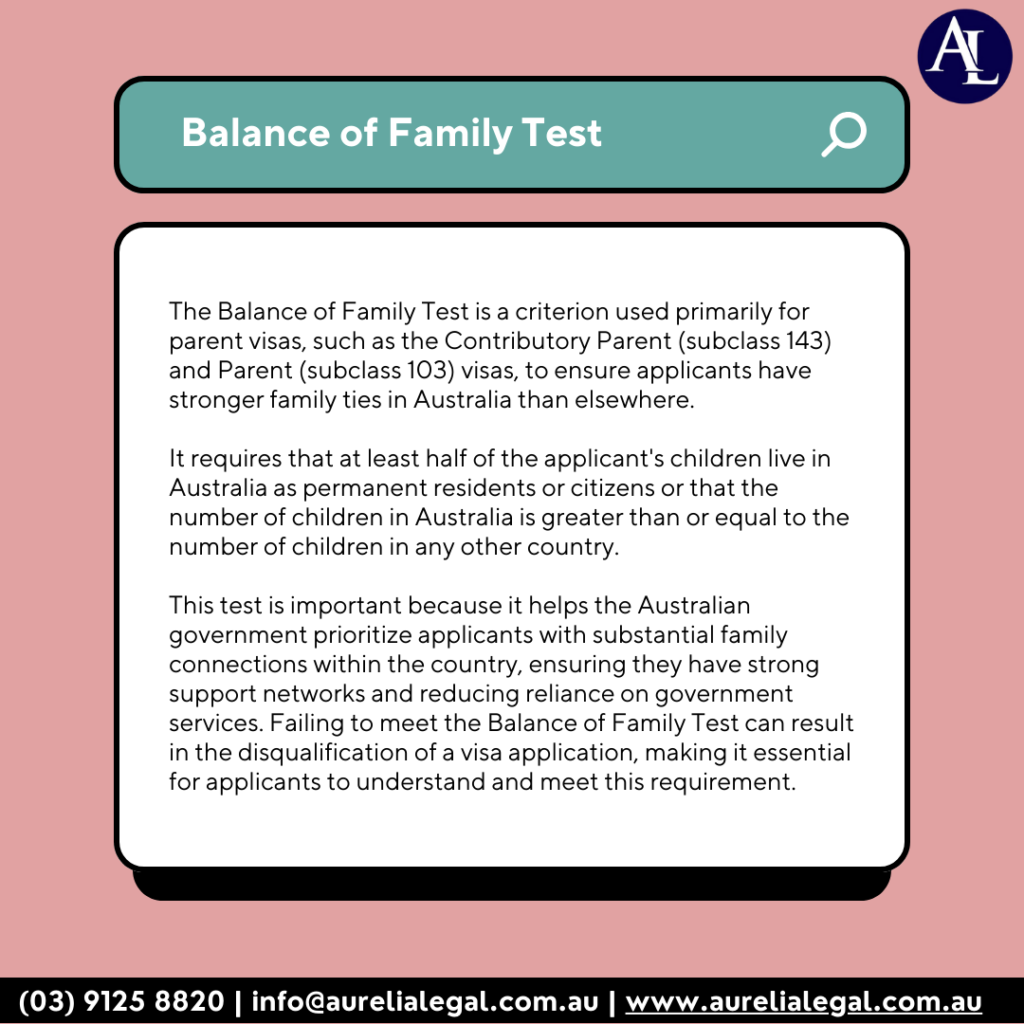
What is the Balance of Family Test?
The Balance of Family Test applies to parent visas like the Contributory Parent (subclass 143) and Parent (subclass 103) visas. It ensures that applicants have stronger family ties in Australia than elsewhere.
To pass the test, at least half of your children must live in Australia as permanent residents or citizens. Alternatively, the number of children in Australia must be greater than or equal to those in any other single country. Example:
- If only one child is in Australia while three live overseas, you do not meet the test.
- If you have four children and two live in Australia, you meet the test.
Why is the Balance of Family Test Important?
Australia’s parent visa program prioritizes applicants with strong family connections in the country. This policy helps manage migration and ensures that parents have support networks, reducing reliance on government services.
Since this test is mandatory for specific parent visas, failing to meet it can result in visa refusal. Understanding the requirements is crucial for those seeking family reunification in Australia.
How to Determine If You Meet the Balance of Family Test
Follow these steps to determine your eligibility:
- Count Your Children – Include all biological, adopted, and step-children, even if they are not dependent on you or in regular contact.
- Identify Where Each Child Lives – Check if your children are Australian citizens, permanent residents, or living overseas.
- Apply the Test Criteria:
- If at least 50% of your children live in Australia, you pass.
- If more children live in Australia than in any other country, you pass.
Special Considerations
Certain situations may affect the Balance of Family Test outcome:
- Estranged Relationships – Even if you are not in contact with a child, they still count in the total.
- Deceased Children – Children who have passed away are not included in the calculation.
How the Test Affects Your Family Visa Application
Passing the Balance of Family Test is essential for many parent visas. If you meet the test, you can proceed with your application but must still fulfill other visa requirements. If you do not meet the test, your visa may be refused, and you may need to consider alternative pathways for family reunification. Understanding the Balance of Family Test can help you plan your visa application with confidence. If unsure, seek professional advice to explore your options.
How Aurelia Legal Can help
Navigating the complexities of the Balance of Family Test and parent visa applications can be challenging. Aurelia Legal specializes in immigration law and can provide expert guidance tailored to your situation. Our team can assess your eligibility, help you gather necessary documentation, and explore alternative visa options if needed. With our expertise, we aim to make your migration journey smoother and stress-free.
Conclusion
The Balance of Family Test is a critical factor in securing a parent visa in Australia. Understanding its requirements and ensuring compliance can significantly improve your chances of a successful application. If you are unsure about your eligibility or need professional assistance, seeking expert legal advice can make all the difference. Contact Aurelia Legal today to discuss your options and take the next step toward reuniting with your family in Australia.
Contact us at +61 3 9125 8820 or info@aurelialegal.com.au
DISCLAIMER: This blog is for general information only. Legislation may change from time to time. Please refer to the latest legislation for current details.