

If your Australian visa has been refused or cancelled, you may still have a future in Australia. Fortunately, you could be eligible to appeal the visa decision through a merits review at the Administrative Review Tribunal (ART).
The ART has legal authority to reassess decisions made by the Department of Home Affairs (DHA), giving applicants a valuable second chance. This guide outlines strategies to improve your chances of a successful visa appeal at the ART.
Why the ART Matters: Latest Tribunal Statistics
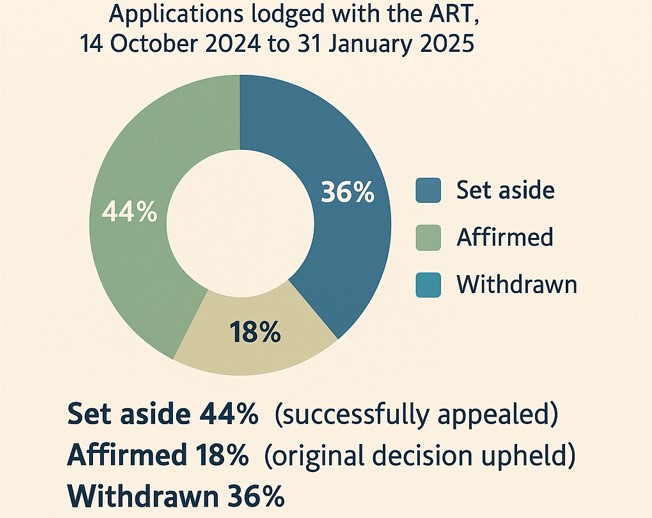
Between 14 October 2024 and 31 January 2025, approximately 8,428 visa appeal applications (mainly student and visitor visas) were lodged with the ART. Of those:
- 44% of decisions were set aside (successfully appealed)
- 18% were affirmed (original decision upheld)
- 36% were withdrawn
As of 31 January 2025, over 27,963 active cases in these categories are still awaiting review. This highlights the ART’s crucial role in the Australian immigration appeal process.
1. Understand the Reason for Your Visa Refusal or Cancellation
It is crucial to understand the reasons for your visa refusal before submitting an appeal. Your DHA refusal or cancellation letter will outline:
- The legislative criteria not met
- The evidence (or lack thereof) that led to the refusal
Common reasons for visa refusal:
- Failure to meet character requirements
- Insufficient supporting evidence
- Financial or health concerns
- Inconsistent or incomplete documentation
- Breach of visa conditions
Understanding these details helps you prepare targeted and effective submissions for your appeal and win your case.
2. Lodge Your Appeal Within the Deadline
You must lodge an appeal within a strict time limit, typically 28 days from the date of the DHA decision. Your refusal letter outlines this deadline.
You can lodge your appeal online via the ART website, and an application fee usually applies. In certain situations, you may qualify for a fee reduction or waiver.
3. Submit New and Relevant Evidence
One advantage of appealing to the ART is that it allows the submission of fresh evidence. Take this opportunity to address the weaknesses in your original application.
Examples of helpful documents include:
- Updated and complete application documents
- Character references and police clearances
- New health or medical reports
- New supporting evidence
Ensure all documents are relevant, properly formatted, and directly related to the reasons for refusal.
4. Write a Strong Personal Statement
Your personal statement is a key element in persuading the Tribunal. It should:
- Address each reason for refusal
- Explain misunderstandings or errors in your original application
- Clearly highlight and outline any new changes in your circumstances since your visa refusal
Be honest, respectful, and focused. A clear and consistent statement demonstrates credibility and may positively influence the outcome and help you win your case.
5. Emphasise Compelling or Compassionate Circumstances
In appeals involving family migration, a protection visa, or other sensitive cases, the Tribunal considers compelling or compassionate circumstances.
Relevant examples include:
- Risk of persecution or harm in your home country
- Strong community ties or long-term residence in Australia
6. Prepare Thoroughly for the ART Hearing
The court may hold your hearing in person, over the phone, or via video conference if your case proceeds to that stage.
Tips for a successful hearing:
- Speak clearly and respond directly to questions
- Bring all supporting documents
- Dress professionally and remain respectful
- Be truthful and composed throughout the process
The hearing is your chance to make a positive impression—treat it seriously.
7. Consider Legal Advice or Representation
Although you can represent yourself, many applicants benefit from the assistance of a registered migration agent or immigration lawyer. Professional support can help you:
- Evaluate the strengths and weaknesses of your case
- Draft a compelling submission
- Gather relevant evidence
- Represent you effectively at the hearing
This is extremely valuable, especially when managing complex visa matters or interpreting legal requirements.
Final Thoughts: Succeeding at the Administrative Review Tribunal
Winning an appeal at the ART is entirely achievable—but it requires planning, precision, and persistence. By understanding your refusal reasons, submitting strong evidence, and clearly explaining your case, you can improve your chances of a successful outcome.
If the ART affirms the Department’s decision, further appeals must rely on jurisdictional error—a much tougher legal standard. Therefore, success at the Tribunal stage becomes even more crucial.
Need Expert Help with Your Appeal?
At Aurelia Legal, we specialise in Australian immigration appeals and skilled visa applications. Our experienced team can assist you in preparing a strong case and guide you through the ART process.
Visit www.aurelialegal.com.au for more information
Call us at +61 3 9125 8820
Email info@aurelialegal.com.au
DISCLAIMER: This blog provides general information only and is not a substitute for legal advice. Immigration laws and policies may change. Always refer to the latest legislation or consult a qualified professional.
Stay Up to Date with Skilled Migration News
Follow our blog for updates on:
- Skilled Occupation List changes
- Visa processing times and appeals
- Technology and migration trends in Australia