
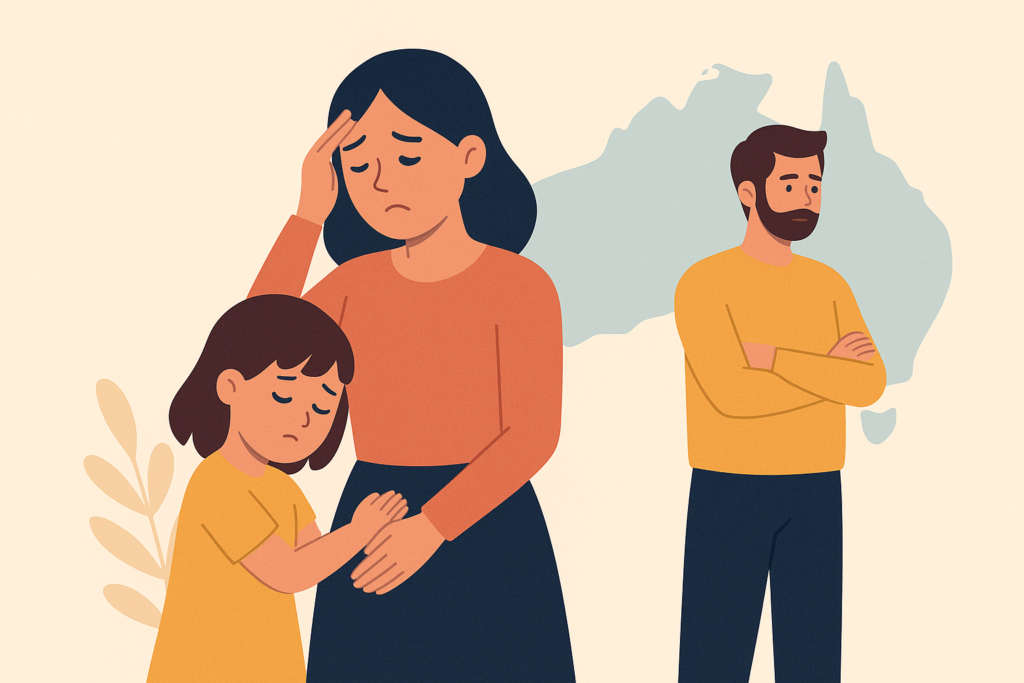
A relationship breakdown is never easy, but for people on a Partner Visa, it can also put their entire future in Australia at risk. If your Australian sponsor withdraws their sponsorship after a separation, and you have a child together, you might be wondering: can I still stay in the country?
The good news is that Australian immigration law provides a specific exception for Partner Visa applicants who share a child with their sponsor. Even if the relationship ends before your permanent Partner Visa is granted, you may still be eligible to stay, but only if you meet the “child of the relationship” criteria.
The “Child of the Relationship” Exception
Usually, to be granted a permanent Partner Visa, you must still be in a genuine and ongoing relationship at the time the application is assessed. However, the visa process is allowed to continue if the relationship ends and the applicant and sponsor share a child.
This exception isn’t automatic. You must provide evidence that both parents share ongoing responsibility for the child. It’s not enough to simply prove that a child exists, the Department of Home Affairs needs to see that you continue to play an active parental role and that removing you from Australia would negatively impact the child’s wellbeing.
Proving Parental Responsibility
The Department will assess whether both parents are contributing to the child’s upbringing. This exception aims to avoid splitting up families or removing a parent from a child’s life purely because the adult relationship ended. The Department may ask for evidence such as:
- Birth certificate naming both parents
- Formal parenting plans or court orders (if any)
- Proof of shared custody or visitation
- Child support payments
- Emails or texts showing shared care arrangements
The stronger the evidence, the more likely your visa is to proceed.
Best Interests of the Child
When a relationship ends, Australian immigration law considers the impact on any children involved, especially if the child is an Australian citizen. If removing a parent would harm the child’s stability, care, or emotional well-being, the Department of Home Affairs may allow the visa holder to stay in Australia. This is even more important where court orders prevent the child from leaving the country or both parents are actively involved in raising the child.
While the “child of the relationship” exception doesn’t guarantee visa approval, it strongly supports your case. The Department will weigh factors such as shared parental responsibility, the child’s best interests, and whether separating the child from a parent would go against public policy. If you can show you’re a committed parent and meet the usual health and character requirements, the permanent Partner Visa may still be granted despite the separation.
Does Shared Custody Guarantee a Visa?
Not automatically, but it significantly helps. The Department will consider:
- Whether the relationship was genuine before the breakup
- Whether a child of the relationship exists
- Whether both parents are involved in the child’s upbringing
- Your character, health, and other visa criteria
If you meet these conditions, your permanent Partner Visa can still be granted, even after separation.
Final Thoughts
Relationship breakdowns are hard. But if you share a child with your sponsor, the end of the relationship doesn’t necessarily mean the end of your visa journey. The best interests of the child matter, and Australian migration law provides a clear pathway to stay in the country and continue parenting your child. Take action early, gather your evidence, and get the right support. You may still be eligible for your permanent Partner Visa, even after the relationship ends.
Need Help With Your Partner Visa?
At Aurelia Legal, we assist individuals navigating the Partner Visa process. We help you prepare strong relationship evidence and address complications like sponsorship withdrawal or separation. Get in touch to avoid delays, protect your visa pathway, and receive clear, expert guidance every step of the way.
📞 (03) 9125 8820
✉️ info@aurelialegal.com.au
🌐 www.aurelialegal.com.au
Disclaimer: This article is for general information only and does not constitute legal advice. Visa criteria, policy, and processing times are subject to change. Please consult a registered migration agent or legal practitioner for advice specific to your situation.