
Many partner and employer-sponsored visa applicants are experiencing much longer wait times than usual. These delays have multiple causes. The Department of Home Affairs reports that processing on-hand visa applications is now a government priority, and that extra staff are being recruited to help clear backlogs. At the same time, huge surges in applications plus complex policy changes mean older cases remain queued for many months. In particular, partner visas have accumulated large numbers of older applications, and the Department is “working through these as quickly as possible”. In short, the system is catching up after the pandemic – but until those old cases are cleared, everyone’s wait can seem longer.
Key factors behind the delays include:
- Huge backlogs and demand: Many partner visa applications piled up during COVID, and also new skilled visa streams (like the TSS to Skills in Demand transition) have increased application volumes.
- Resource constraints: Although extra staff are on the way processing each visa takes time – medical checks, police checks, and sponsor/employer checks all add delays. Ministerial policies can also shift attention and create uneven wait times.
- Complex cases: Partner visas often involve international evidence and background checks, which vary in speed by country. Employer-sponsored visas (482/186) may involve regional or occupation-based prioritisation, and skills assessments for 482 can also slow things down.
Current Processing Time Estimates
To set realistic expectations, use the Department’s latest published processing times (March 2025). As of that update:
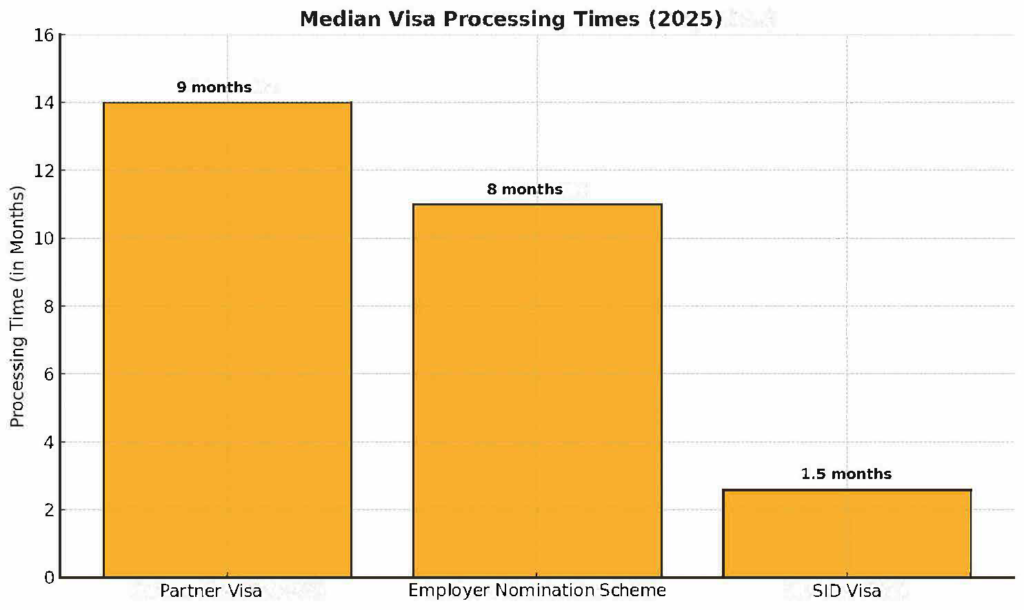
- Partner visa – about 9 months median processing time.
- Employer Nomination Scheme – about 8 months median and Skills in Demand – about 43 days median. Actual waits can be longer, especially for complex cases or if additional information is needed. The Department updates these estimates regularly, and you can use the official Visa Processing Times Guide on the Home Affairs website to get tailored estimates for your specific visa subclass and lodgement date.
Tips for Managing Delays
While waiting, there are several practical steps you can take to avoid further holdups and potentially speed things up:
- Ensure your application is complete: Submit your visa online via ImmiAccount and provide every required document up front. The Department stresses that applications processed with all necessary supporting documents move faster. Use the ImmiAccount checklists and templates to avoid missing anything. If more information is requested later (health exams, police checks, sponsor documents, etc.), respond as quickly as possible.
- Monitor your case via ImmiAccount: Home Affairs will not give progress updates outside ImmiAccount. Log in regularly to check if any messages or requests have appeared.
- Request priority processing (if truly urgent): The Department allows some visa cases to be prioritised only in compelling and compassionate circumstances. Examples might include serious medical issues, risk of violence, or other emergencies. If your situation qualifies, you may request priority processing after submitting a fully complete application.
- Seek help if needed: If your visa processing far exceeds the published timelines with no clear explanation, you can escalate the issue. First, consider contacting the Department through its general inquiries (via ImmiAccount or a migration agent). If you still have serious concerns, you may lodge a complaint with the Commonwealth Ombudsman. The Ombudsman’s office specifically handles “visa and citizenship processing delays” They can investigate undue delays or administrative problems.
- Stay in touch with your sponsor or employer: For employer-sponsored visas (482/186), make sure your employer lodges and follows up on any nomination or sponsorship tasks promptly. If Home Affairs has questions about the business or job, a fast response from your sponsor can prevent additional delay. For partner visas, keep your Australian sponsor (partner) informed so they can help supply documents (e.g. proof of relationship, financial statements) if needed.
Working and Traveling While You Wait
- Work rights: If you applied for a partner visa from within Australia, you will normally hold a Bridging Visa A once your old visa expires. The general rule is that the BVA inherits the work conditions of your previous visa, so if your old visa already allowed work, your bridging visa does too. In practice, this means most partner-visa applicants can continue working full-time for any employer until the decision. Always double-check by using the Visa Entitlement Verification Online (VEVO) service.
- Travel: If you hold only a Bridging Visa A (or similar) while waiting, you generally cannot leave Australia without ending your visa. Only a Bridging Visa B (BVB) has a travel facility. In other words, if you depart on a BVA (or any non-BVB), your visa ceases and you may not be able to return until you obtain your new visa. Therefore, do not travel overseas unless you have first applied for and obtained a Bridging Visa B with the appropriate travel dates. The BVB is granted with a specific travel period, and you must re-enter during that window or lose your visa.
Managing Expectations and Next Steps
- Plan for the long haul: Base your decisions (job offers, travel, move-out dates) on current official timeframes, not on hopeful guesses. If possible, avoid making irreversible commitments (like quitting a job or selling property) until you have the visa.
- Stay proactive and organised: Keep copies of all correspondence and documents. Renew any expiring police checks or medical exams if Home Affairs asks for them later. Update your contact details in ImmiAccount if they change.
- Seek support: Talk to your migration agent or lawyer if you have one; they can lodge inquiries on your behalf. If you’re feeling overwhelmed, reach out to support networks – many community groups and consultancies share updates on visa timelines.
- Be patient but positive: Thousands of people are in similar positions. A delayed decision doesn’t mean refusal – it usually just means “processing.” Once the outcome comes through, you can move forward with planning life in Australia.
How Aurelia Legal Can Assist
At Aurelia Legal, we support visa applicants by:
- Advising on current partner and employer-sponsored visa processing trends
- Assisting with ImmiAccount follow-ups and document uploads to avoid unnecessary delays
- Preparing compelling priority processing or compassionate grounds requests
- Guiding clients through bridging visa conditions and travel limitations
- Escalating excessive delays through appropriate channels, including the Ombudsman
For tailored assistance, contact us on +61 3 9125 8820 or email info@aurelialegal.com.au.
Disclaimer: This article is for general information only and does not constitute legal advice. Visa criteria, policy, and processing times are subject to change. Please consult a registered migration agent or legal practitioner for advice specific to your situation.