
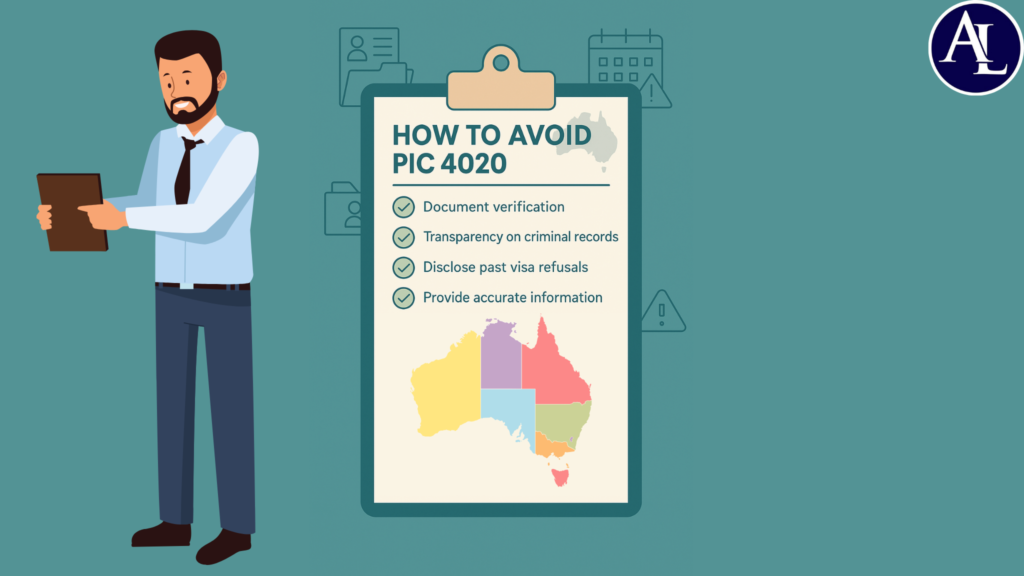
Public Interest Criterion 4020 (PIC 4020) is one of the most serious and misunderstood reasons a visa application can be refused. If the Department believes you’ve submitted false or misleading information, a bogus document, or cannot satisfy identity requirements, you may face a visa refusal and a reapplication ban for up to 10 years.
And it doesn’t stop with you. Family members included in the application may also be barred. Your future visa options, even for unrelated pathways, can be wiped out with a single adverse finding.
But most of these situations are entirely avoidable. This guide sets out strategic tips to keep your application clear of PIC 4020.
1. Only Submit Documents You Can Independently Verify
Every document you upload, such as the degree certificates, payslips, reference letters, and bank statements, should be backed by an independent third party. Don’t rely on documents that were “recreated” because originals were lost. If the Department can’t verify your evidence with the issuing body, it may be deemed bogus, even if the content is technically true.
Tip: Include direct contact details of institutions or employers, and let them know they may be contacted.
2. Be Completely Transparent About Criminal Records
Even minor offences, including spent convictions or overseas cautions, should be disclosed. Failing to disclose criminal history is one of the most common PIC 4020 triggers, especially on Form 80.
Remember: “Failure to disclose” is treated the same as “providing false information.” If in doubt, disclose and explain with supporting documentation.
3. Declare Every Previous Visa Refusal or Cancellation
If you’ve had a visa refused or cancelled anywhere in the world, you must declare it. This includes refusals from Australia, Canada, the UK, and even countries with minimal visa requirements. The Department often receives information-sharing alerts from international partners. If they find a refusal you didn’t disclose, that’s instant PIC 4020 territory.
4. Triple-Check Your Answers Before Lodging
It’s not just outright lies that trigger PIC 4020. A wrong date, inconsistent employment timeline, or mismatched qualification details can all be viewed as false or misleading. Use checklists. Keep a spreadsheet. If you’re unsure about a detail, confirm it first.
5. Be Wary of Dodgy Migration Agents
Some offshore and onshore agents encourage document tampering, “template” experience letters, or forged English test results. Legally, you are responsible for every word and document submitted in your name. Blaming your agent won’t save your visa.
Pro tip: Use a registered migration agent (MARN holder) or immigration lawyer. If you suspect your agent is being dishonest, seek legal advice immediately.
6. Always Keep a Record Trail
Save everything: drafts, final documents, emails to and from your agent, test bookings, and visa application receipts. If you ever need to prove your intent or that you submitted documents in good faith, this record will be critical. Courts and tribunals often look for contemporaneous evidence. If your word is all you have, it may not be enough.
7. Avoid “Reconstructed” Work Evidence
Don’t submit backdated or “recreated” documents, especially for employment history. These are usually picked up by the Department’s integrity unit. If genuine documents are missing, provide a written explanation and alternative corroborating evidence like superannuation records, tax returns, or statutory declarations.
8. Tell the Truth – Even If It Hurts Your Chances
It’s tempting to leave out failed courses, gaps in employment, or immigration complications. But even small omissions can backfire badly. Case laws show that intent to deceive is key, but the Department doesn’t need to prove criminal intent. Omissions that “materially mislead” can be enough to invoke PIC 4020.
9. Understand What “False or Misleading” Actually Means
False = incorrect. Misleading = creates the wrong impression. You can fall foul of PIC 4020 without lying, if your information leads the Department in the wrong direction. Example: Listing “2016–2019: Accountant” when you were actually a trainee for part of that time may be misleading unless clarified.
10. Get Strategic Advice Before You Apply (Especially if You Have History)
Have you had a prior refusal? Changed names? Worked informally? Used another agent before? These are all red flags to the Department. Don’t wait for a natural justice letter. Pre-emptively addressing risks in your application can make the difference between approval and refusal.
Steering Clear of PIC 4020: Final Words of Advice
PIC 4020 is strict, but not absolute. Innocent errors can be explained. Supporting documents can be clarified. But you must act early, be thorough, and take full responsibility for your application.
Need help navigating visa risks before they become refusals?
At Aurelia Legal, we advise applicants on PIC 4020 risks, assist with waivers, and prepare strategic responses that reduce the chance of refusal.
📞 (03) 9125 8820
✉️ info@aurelialegal.com.au
🌐 www.aurelialegal.com.au
Disclaimer: This article is general in nature and does not constitute legal advice. For tailored guidance, please speak with a registered migration lawyer or agent.