

Australia’s General Skilled Migration (GSM) program remains one of the most popular pathways for skilled workers seeking to build a life in Australia. But it’s also one of the most misunderstood. Many applicants believe lodging an Expression of Interest (EOI) alone guarantees a visa, but GSM involves a competitive process that requires careful planning, timing, and a realistic understanding of your points ranking.
How GSM Works
The GSM program allows skilled workers to apply for visas based on their qualifications, English proficiency, and work experience. The key visas under GSM are:
- Subclass 189 Skilled Independent Visa – Does not require state or territory nomination. Offers permanent residency anywhere in Australia but typically requires a high points score due to limited invitations.
- Subclass 190 Skilled Nominated Visa – Requires nomination by a state or territory government. Provides permanent residency but includes a two-year commitment to live and work in the nominating state or territory.
- Subclass 491 Skilled Work Regional Visa – Requires nomination by a state, territory, or eligible relative living in regional Australia. It is a five-year provisional visa with a pathway to permanent residency through the Subclass 191 visa if regional residence and income requirements are met.
The process begins with submitting an EOI through SkillSelect. The EOI includes details of your occupation, points claims, skills assessment, English language results, and work experience. You won’t apply for the visa directly; instead, you wait for an invitation to lodge your visa application.
How Does SkillSelect Work?
SkillSelect is the Department of Home Affairs’ online system where you submit an EOI. You cannot apply for a GSM visa without an invitation.
Key points about SkillSelect:
✔ EOIs stay valid for two years but must be kept up to date
✔ Invitations depend on your points, your nominated occupation’s ceiling, and quotas set by the government
✔ Invitations often exceed the minimum 65 points requirement, with recent trends showing competitive scores of 85 or more in many occupations
SkillSelect and Invitation Rounds
SkillSelect operates as a ranking system: your EOI competes with other applicants in the same occupation. Invitations are issued in periodic rounds, with priority given to the highest points scorers in occupations with unfilled quotas. Some occupations receive invitations at lower points thresholds due to high demand, while others require exceptionally high scores.
Occupation Lists
Your nominated occupation must appear on the relevant skilled occupation list:
- MLTSSL (Medium and Long-term Strategic Skills List) for 189 and 190 visas.
- STSOL (Short-term Skilled Occupation List) generally supports 190 and 491 but not 189.
- ROL (Regional Occupation List) primarily supports 491 visas.
Knowing which list your occupation is on will determine which visas you can realistically pursue.
Points System
The GSM program uses a points test, requiring a minimum of 65 points to submit an EOI. However, achieving 65 does not guarantee an invitation, the practical threshold is often much higher for competitive occupations. Points are awarded based on factors including:
- Age (maximum points if you’re under 33).
- English proficiency (with Proficient or Superior English giving significant boosts).
- Skilled employment in Australia or overseas.
- Educational qualifications.
- Partner skills and English ability.
- Australian study requirements, Professional Year, NAATI accreditation, and regional study.
Registration of Interest
In addition to submitting an EOI through SkillSelect, some Australian states and territories require skilled migration applicants to complete an ROI directly with the state government. The ROI allows the state to gather more information about your background, work experience, and ties to the region so they can decide whether to nominate you for a Subclass 190 or 491 visa.
States such as Victoria and the Australian Capital Territory (ACT) use the ROI process to manage large numbers of applications and prioritise candidates who best meet local workforce needs. The ROI typically asks for:
✔ Details about your employment history and current work in Australia
✔ Evidence of your ties to the state or territory, such as study or residence
✔ Information on your skills and qualifications relevant to local occupation shortages
✔ Commitment statements explaining why you wish to live and work in that region
Submitting an ROI does not guarantee you will be selected for nomination, but it is a required step for some states. Make sure you follow each state’s instructions carefully and lodge your ROI before their program closes.
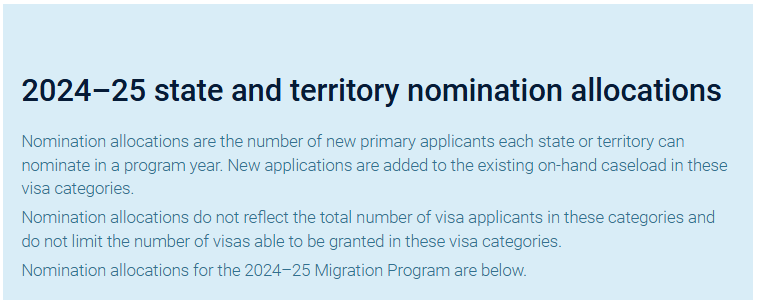
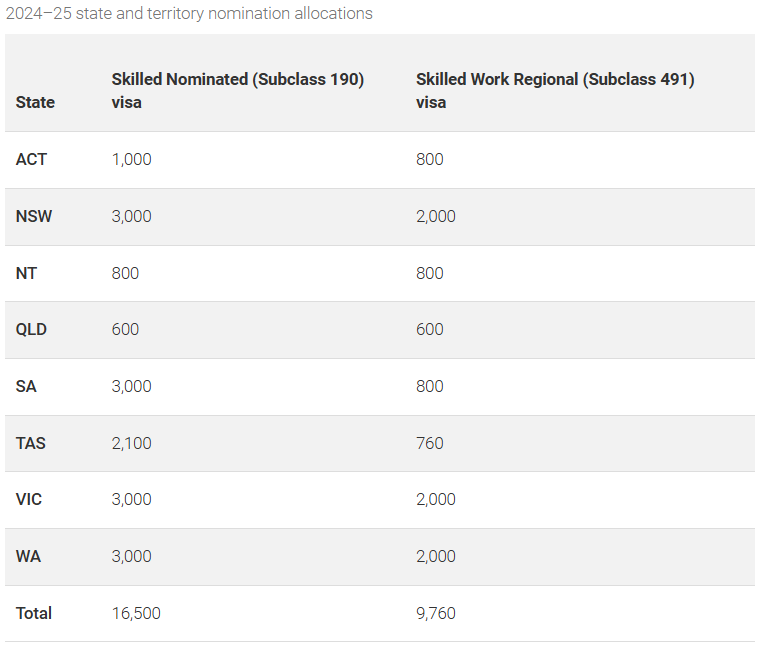
2024–25 State and Territory Skilled Visa Allocations
The following tables, sourced directly from the Australian Department of Home Affairs, show the 2024–25 state and territory nomination allocations for the Subclass 190 and 491 visas. These official figures highlight how many new applicants each state can nominate this program year, helping skilled migrants plan their pathways more effectively.
Choosing the Right Pathway
The 189 visa offers the freedom to live and work anywhere in Australia but is highly competitive due to limited invitations. The 190 visa is more accessible if you can secure state nomination but requires a genuine commitment to living in the state. The 491 visa offers a strong option for those open to regional areas, especially as many states prioritise regional applicants to support local skills shortages.
Key Takeaways
- Understanding the GSM framework is crucial for planning a successful skilled migration strategy.
- Lodging an EOI without a realistic understanding of your competitiveness can lead to long delays or no invitations.
- Applicants should track invitation round results, state nomination programs, and changes to occupation lists to adjust strategies proactively.
With careful preparation and informed choices, the GSM program can be a pathway to permanent residency and a new life in Australia.
Need help with your skilled migration journey?
Contact Aurelia Legal today for tailored advice and step-by-step support on your Australian skilled visa application.
📞 (03) 9125 8820
✉️ info@aurelialegal.com.au
🌐 www.aurelialegal.com.au
Disclaimer: The information in this blog is general in nature and does not constitute legal advice. You should seek professional advice based on your individual circumstances before acting on any information contained herein.