

Sponsoring skilled workers from overseas can be a valuable solution for businesses in Australia facing a shortage of local talent. Whether you’re looking to sponsor your first overseas employee or take over an existing sponsorship, following the correct process is essential. Below is a detailed guide to walk you through each step. You can read more about this here
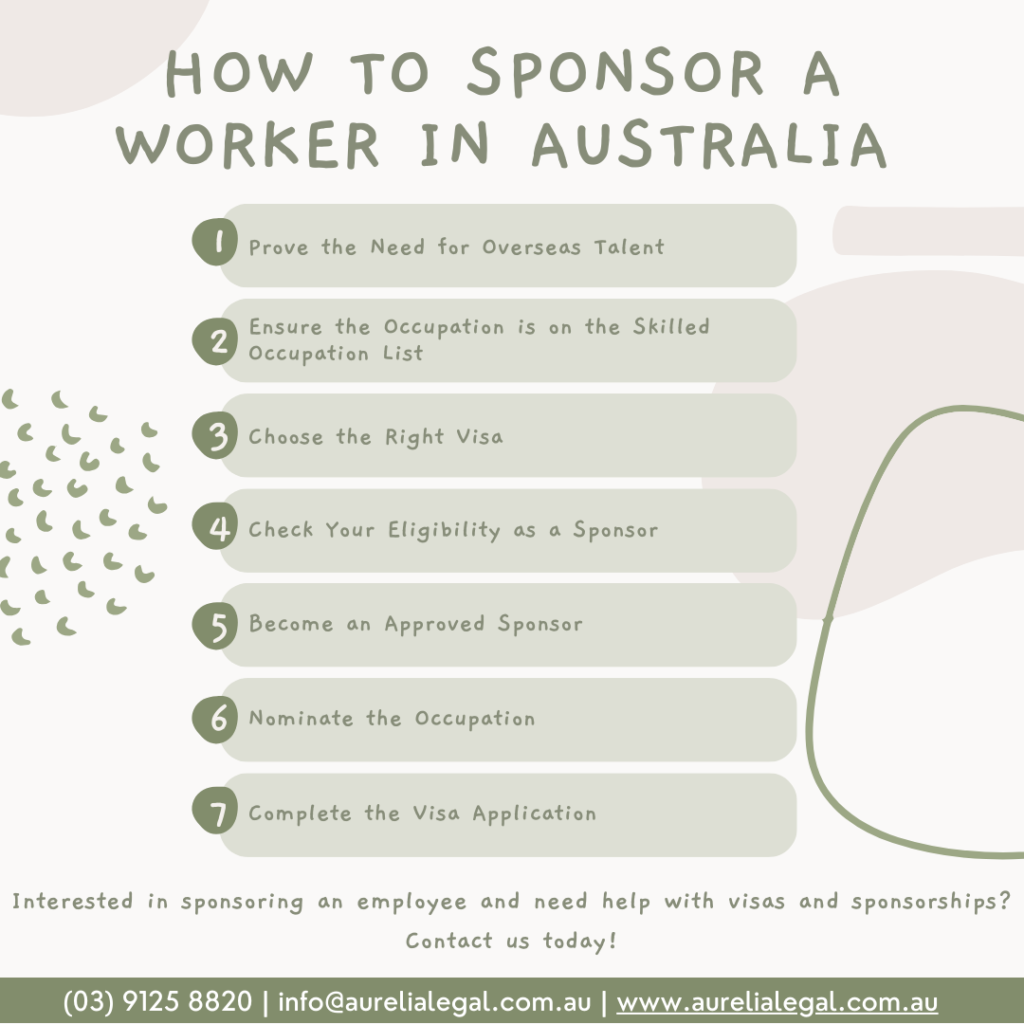
Step 1: Prove the Need for Overseas Talent
Before you can hire someone from abroad, the Australian government requires that you demonstrate a genuine effort to recruit locally. This is known as Labour Market Testing (LMT). You’ll need to:
- Advertise the job vacancy in Australia for a specified period (generally 28 days).
- Document your recruitment efforts, including details of where and how the job was advertised.
- Provide evidence that you were unable to find a suitable Australian candidate to fill the role.
Step 2: Ensure the Occupation is on the Skilled Occupation List
Not every role can be sponsored. The occupation you want to fill must be on the Skilled Occupation List (SOL), which outlines the jobs that are in demand in Australia. This list is regularly updated by the Australian government based on the country’s labour market needs.
What if the occupation isn’t on the list? If your desired occupation isn’t on the SOL, you may still be able to hire internationally through a Labour Agreement. Labour agreements are individually negotiated contracts between an employer and the Australian government, typically used for niche industries or regions facing severe shortages.
Qualifications and Skills: The worker you want to sponsor must have qualifications and skills that align with the position. This may include recognition of skills through a formal Skills Assessment (if required by the visa), relevant work experience and educational qualifications
Step 3: Choose the Right Visa
The next step is choosing the most suitable visa option for the worker and the position. The most common visa types for employer sponsorship include:
- Temporary Skill Shortage (TSS) Visa (Subclass 482): Allows employers to sponsor skilled workers for up to four years, depending on the occupation.
- Employer Nomination Scheme (ENS) Visa (Subclass 186): Permanent visa for skilled workers who have been nominated by an employer.
Each visa type has different requirements and conditions, so it’s important to assess which one aligns best with your needs. You can use the Visa Entitlement Verification Online (VEVO) system to check the worker’s visa status and eligibility.
Step 4: Check Your Eligibility as a Sponsor
Before you proceed with sponsoring a worker, your business must meet specific requirements to become an approved sponsor. Key criteria include:
- Having an operating business in Australia.
- Demonstrating a genuine need for the role being filled.
In some cases, you may also need to provide proof of your company’s financial standing and its ability to meet wage obligations for the sponsored worker.
Step 5: Apply to Become an Approved Sponsor
Once you’ve confirmed your eligibility, you can apply to become an approved sponsor or nominator. This involves submitting an application to the Department of Home Affairs, detailing your business operations and why you require a skilled worker.
Accredited Sponsorship: If your business qualifies, you may apply for accredited sponsorship. This can expedite the visa application process by granting you priority processing. Businesses with a long history of sponsorship and a clean compliance record may be eligible for accreditation.
Step 6: Nominate the Occupation
After becoming an approved sponsor, the next step is to nominate the position in your organisation for which you want to sponsor the worker. The nominated occupation must be on the Skilled Occupation List, and aligned with the visa type you have chosen.
You’ll need to provide detailed information about the position, including the responsibilities, required skills, and market salary rate. The salary must meet or exceed the Temporary Skilled Migration Income Threshold (TSMIT), which ensures that workers are paid fairly and in line with Australian standards.
Step 7: Complete the Visa Application
The final step in the process is for the nominee (skilled worker) to submit the visa application. While this is primarily their responsibility, as the employer, you should assist them in understanding and meeting the visa requirements. Depending on the visa, the worker may need to:
- Undergo a skills assessment: This is an evaluation by a relevant assessing authority to verify that their qualifications and experience meet Australian standards.
- Provide health and character checks.
- Demonstrate English language proficiency.
Once the visa is lodged, the worker and your business must comply with the specific visa conditions to ensure continued sponsorship.
What to Do If You’ve Taken Over a Business with Sponsored Employees
If you’re acquiring a business with workers on Temporary Skill Shortage (TSS) visas, you’ll need to apply to become an approved sponsor for that business and lodge new nominations for each TSS visa holder to transfer their sponsorship under your business.. The worker does not need to apply for a new visa unless it’s about to expire or their role is changing.
Need Help Sponsoring an Employee?
Navigating Australia’s visa and sponsorship process can be complex. If you’re interested in sponsoring an employee and need expert assistance with visas and sponsorships, Aurelia can help! Reach out today to get the guidance and support you need for a smooth process.
Contact us at at +61 3 9125 8820 or info@aurelialegal.com.au