

The aged care sector in Australia is undergoing significant transformations, driven by evolving compliance standards and new legislative proposals. As the sector continues to adapt, it is crucial for providers to stay informed and responsive to these changes to ensure high-quality care for residents.
Summary of the AQSC Sector Quarterly Report (April – June)
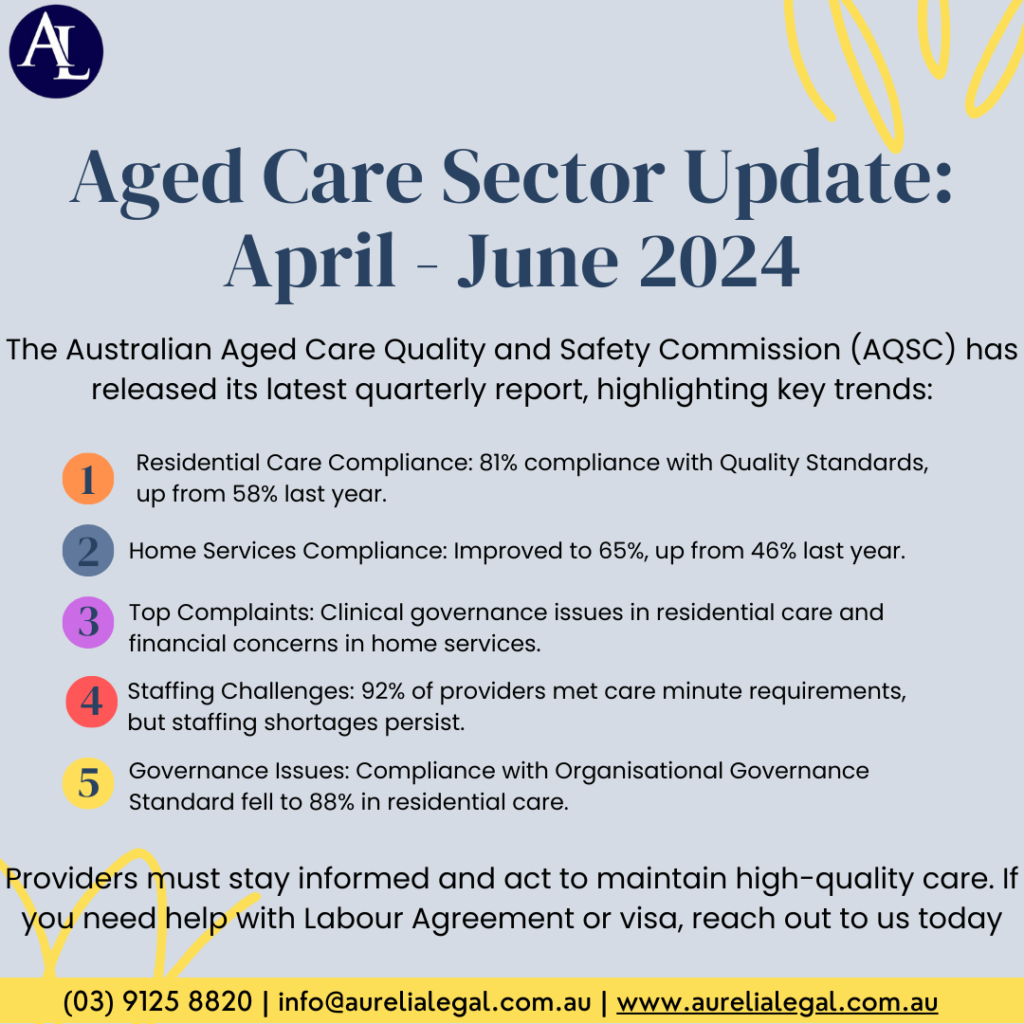
The Australian Aged Care Quality and Safety Commission (AQSC) has released its quarterly report for the period of April to June 2024, highlighting trends in compliance among residential care and home service providers with the 8 Quality Standards.
Overall Compliance Trends
Residential Care: Compliance with the Quality Standards has remained relatively stable this financial year, with a slight decrease of 3 percentage points to 81% compared to the previous quarter (Q3). However, this is a significant improvement from the start of the previous financial year when compliance was only 58%.
Home Services: Compliance remains notably lower in home services, with only 65% of providers fully compliant in Q4. This marks an improvement from just 46% at the beginning of the last financial year.
Clinical Governance Concerns
Complaints related to clinical governance continue to be a concern, as clinical issues remain among the top five complaints in residential care. In Q4, there was a notable rise in complaints regarding falls and post-fall management, indicating a need for increased oversight by providers.
Complaints in Home Services
In home services, issues related to fees, charges, and financial management rank among the top five complaints. Communication and consultation issues persist as the most frequent concerns. Providers are urged to ensure transparent pricing and to obtain consent before making changes to home care packages.
Quality Standard Compliance
Compliance with Quality Standard 8 (Organisational Governance) fell to 88% in residential care and 70% in home services in Q4. This decline comes after a previous improvement, highlighting ongoing challenges in corporate and clinical governance frameworks.
Personal Care and Clinical Care:
Compliance with Quality Standard 3 (Personal Care and Clinical Care) in residential care decreased by 3 percentage points to 89%, while home services saw a more concerning drop of 9 percentage points, now at 81%. This reflects a troubling trend as home services compliance has slipped below the previous financial year’s levels.
Care Minutes and Staffing Levels
Quality Standard 7 (Human Resources) reported the lowest compliance rates in residential care, with concerns about staffing levels ranking as the fourth most common complaint. Residential providers must have a registered nurse onsite and on duty 24 hours per day and meet their care minutes target. As of June 2024, 92% of providers complied with this responsibility. However, staffing shortages remain a critical issue, affecting the ability to deliver adequate care.
Serious Incident Reporting
There has been a rise in reported serious incidents in residential care, although the rate has stabilized over the last two quarters. In home services, serious incident notifications have increased since the extension of the Serious Incident Response Scheme (SIRS) in December 2022, but remain significantly lower than in residential aged care.
Noncompliance with Feedback and Complaints Standard
For the first time, noncompliance with Quality Standard 6 (Feedback and Complaints) emerged as a top three issue in home services, with compliance falling to 80%. One in five providers failed to comply, particularly in utilizing feedback to enhance quality.
Changes in the regulations
Since July 2024, there have been significant changes in the aged care sector. The required care minutes increased to 200 care minutes per resident per day, which includes 40 minutes of registered nurse (RN) care. As of October 2024, this requirement has risen again to 215 care minutes, including 44 minutes of RN care. You can read about this here.
Looking ahead, the proposition of a new aged care bill is set to be introduced, which will further impact compliance standards across the sector. With these significant changes on the horizon, it is crucial for providers to hire and sponsor international staff to meet the enhanced care requirements. The increase in care minutes necessitates a robust workforce to deliver high-quality care effectively.
In the current landscape of Australia’s aged care sector, labour agreements have emerged as a vital resource for both employers and employees, facilitating a smoother hiring process and ensuring compliance with regulatory requirements. Additionally, it is essential for employers to fully understand the various visa options available for workers in the aged care sector, as navigating the complexities of the visa system can significantly impact their ability to recruit and retain qualified personnel.
Conclusion
The AQSC’s report indicates that while there are improvements in compliance across both residential and home services, significant challenges remain, particularly in clinical governance, effective incident management, and staffing levels. Providers are encouraged to prioritize adherence to Quality Standards, enhance communication, and actively seek feedback to foster quality care and improve service delivery. The Commission will continue to monitor these issues and take necessary actions to ensure compliance and improve outcomes for aged care recipients.
How Aurelia Can Help
If you need staff and assistance with visas, Aurelia Legal can help. We offer tailored solutions to ensure your care facility is adequately staffed while navigating the complexities of visa applications. Contact us today to learn more!
Contact us at at +61 3 9125 8820or info@aurelialegal.com.au