

The Orphan Relative Visa (subclass 117 and subclass 837) is an Australian visa designed to allow a child who is orphaned or without parental care to live permanently in Australia with a relative. This visa provides a pathway for children whose parents are deceased, unable to care for them, or untraceable, ensuring they have a stable home with an Australian family member.
In this guide, we’ll cover everything you need to know about the Orphan Relative Visa, including eligibility requirements, application steps, and tips for success.
Overview of the Orphan Relative Visa
The Orphan Relative Visa is available in two subclasses:
- Subclass 117: For children outside Australia at the time of application and decision.
- Subclass 837: For children already in Australia when they apply and when the decision is made.
Both visas allow the child to:
- Permanently migrate to Australia and live with a sponsoring relative.
- Access Medicare, Australia’s public healthcare system.
- Study and work in Australia.
- Apply for Australian citizenship (if eligible).
Eligibility Requirements
To qualify for an Orphan Relative Visa, several specific eligibility criteria must be met by both the child applicant and their sponsoring relative.
For the Child Applicant
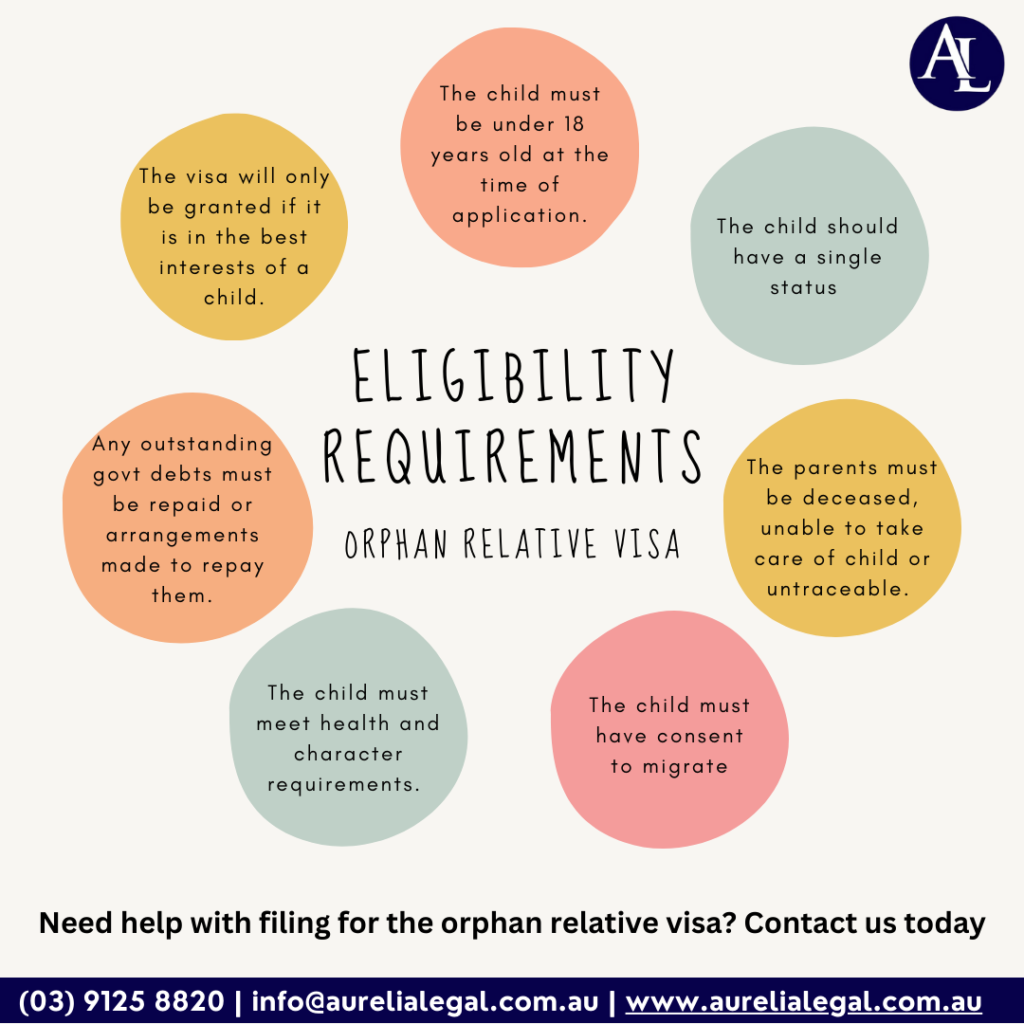
- Age Requirement: The child must be under 18 years old at the time of application.
- Single Status: The child must be unmarried, not in a de facto relationship, and have no parent who can care for them.
- Parental Status: The child’s parents must be:
- Deceased,
- Permanently unable to care for the child, or
- Untraceable (cannot be found).
- Consent to Migrate: If the child is under 18, they must have:
- Written consent from all individuals with legal rights to decide where the child lives,
- Legal permission from their home country, or
- Consistency with any relevant Australian child custody order.
- Health and Character Requirements:
- The child and any dependents must meet Australian health and character standards.
- Debts to the Australian Government: Any outstanding government debts must be repaid or arrangements made to repay them.
- Best Interests of the Child: The visa will only be granted if it is in the best interests of a child under 18.
For the Sponsoring Relative
The sponsoring relative must:
- Be an Australian citizen, eligible New Zealand citizen, or Australian permanent resident.
- Be an eligible family member, such as a sibling, step-sibling, grandparent, aunt, uncle, or their step-equivalent.
- Meet sponsorship requirements, including having no criminal convictions related to children.
Step-by-Step Application Process
1. Prepare the Necessary Documents
- Identity Documents: Passport, birth certificate, and any national identity documents.
- Parental and Custody Documents: Documentation showing the parents’ inability to care, death certificates if applicable, and legal custody or consent documents.
- Health and Character Checks: Medical examinations and background checks for children over 16.
- Sponsor Documents: Proof of relationship, sponsor’s citizenship or permanent residency status, and any police checks.
2. Submit the Visa Application
- Outside Australia (Subclass 117): Submit the application online via the ImmiAccount if the child is outside Australia.
- Inside Australia (Subclass 837): Apply within Australia if the child is already in the country. The child cannot be in immigration clearance when applying.
3. Await Processing and Submit Additional Information (If Required)
Processing times vary, so it’s essential to prepare for a potentially lengthy waiting period. During this time, additional information or documents may be requested by the Department of Home Affairs.
Step 4: Decision on the Visa
The Department of Home Affairs will notify you of the decision. If granted, the child will receive permanent residency status. If refused, reasons will be provided, along with options for appeal.
Tips for a Successful Application
- Organize Documents Early: Delays often occur due to missing or incomplete documentation, so be thorough in gathering everything required before submission.
- Understand Sponsorship Rules: Ensure the sponsor meets all requirements and has a clean record, particularly concerning child-related offenses.
- Seek Legal Consent for Minors: If the child is under 18, verify that all necessary consents and legal permissions are in place to avoid processing delays.
- Meet Health and Character Standards: Be proactive with health exams and police checks to ensure the application progresses smoothly.
- Consider Professional Help: Immigration applications can be complex, and consulting Aurelia Legal can help you avoid common pitfalls.
Conclusion
The Orphan Relative Visa provides a compassionate and permanent solution for children who have lost parental support, allowing them to reunite with family in Australia. By following the outlined steps, ensuring eligibility, and preparing a complete application, you can maximize the chances of success. This visa not only offers the child a secure environment but also opens doors to future opportunities in Australia.
Navigating the Orphan Relative Visa process can be complex, with strict eligibility requirements and detailed documentation. At Aurelia Legal, we provide expert guidance to ensure a smooth application process. Our immigration specialists assist with document preparation, legal consents, and sponsorship requirements to maximize your chances of approval. We also help address any challenges that may arise, including appeals in case of visa refusals. With our dedicated support, you can confidently reunite your family in Australia while ensuring compliance with all legal requirements.
Contact us at +61 3 9125 8820 or info@aurelialegal.com.au
DISCLAIMER: This blog is for general information only. Legislation may change from time to time. Please refer to the latest legislation for current details.