
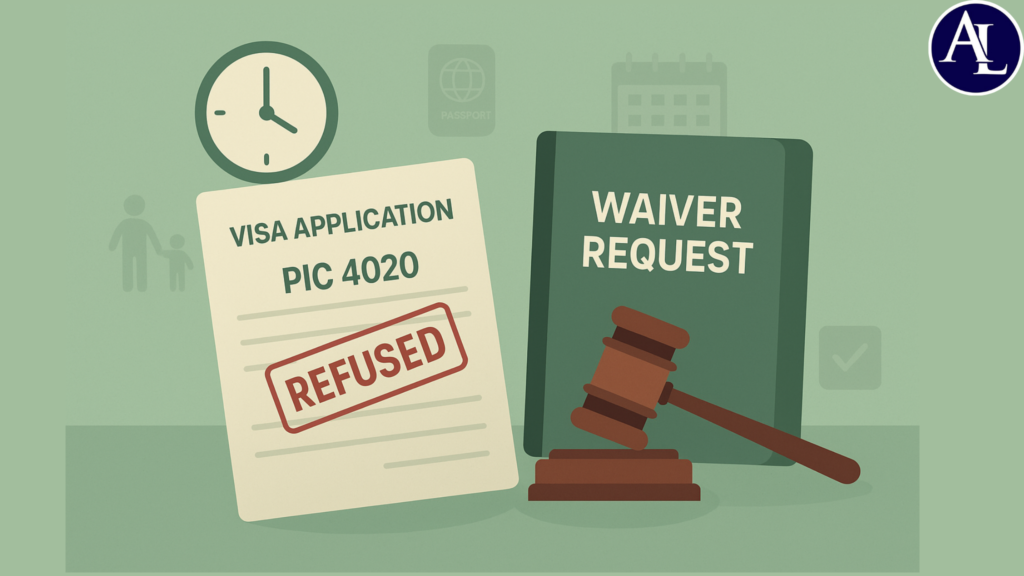
Public Interest Criterion 4020 (PIC 4020) empowers the Department of Home Affairs to refuse a visa if an applicant provides false or misleading information or a bogus document. In most cases, this triggers a 3-year or 10-year reapplication ban.
However, in some circumstances, a waiver may be available. This blog outlines who may qualify for a waiver, the types of supporting evidence required, and the critical limits, including where no waiver is permitted under the Migration Regulations.
What Is a PIC 4020 Waiver?
A waiver is a formal request asking the Department to overlook the consequences of a breach of PIC 4020, based on compelling circumstances. It allows an applicant to still be granted a visa despite the existence of a prior false statement or bogus document.
Not all breaches are equal. The availability of a waiver depends heavily on what kind of breach occurred, who is affected, and the broader implications for others (particularly Australians and permanent residents).
Who May Be Eligible?
A waiver may be considered where the Department is satisfied that:
- There are compelling circumstances affecting Australia, or the interests of an Australian citizen, permanent resident, or eligible New Zealand citizen; or
- The applicant is a minor (under 18); or
- There is sufficient evidence that the misinformation was unintentional, immaterial, or arose from coercion or poor advice.
Importantly, the bar for demonstrating compelling circumstances is very high. General hardship, regret, or inconvenience is rarely enough. The applicant must demonstrate a serious and well-substantiated impact. For example, harm to an Australian child, urgent need for their care, or medical issues that no other person can address.
Compelling vs Compassionate Circumstances
Although the two often overlap, compelling refers to situations with strong legal, public interest, or policy considerations, while compassionate circumstances are based on personal hardship.
Examples include:
- A long-term Australian partner who would suffer significant harm if the visa were refused.
- An Australian child dependent on the applicant for care or emotional stability.
- Critical health treatment for an Australian citizen that the applicant facilitates or supports.
No Waiver Available for Identity Fraud: 4020(2A)
A waiver is not available in all cases. Regulation 4020(2A) of the Migration Regulations 1994 (Cth) specifically prevents the Department from granting a waiver when it refuses a visa because the applicant:
- Failed to satisfy identity requirements, or
- Provided bogus identity documents.
These cases automatically attract a 10-year ban, and there is no legislative discretion for the Department to waive it, no matter how compelling the personal or public interest factors may be.
When Are Waivers Considered?
The Department may consider a waiver at the time of decision if:
- The visa application includes a response addressing the alleged breach, and
- The applicant has clearly requested a waiver with supporting evidence.
It is not automatic. Applicants must make their case proactively, preferably with legal representation. A well-prepared waiver submission should:
- Identify the nature of the breach (what happened and why)
- Address whether the breach was deliberate, reckless, or the result of misinformation
- Provide detailed evidence of the compelling circumstances
- Highlight the impact on Australian citizens or permanent residents, not just the applicant
Practical Tips for Requesting a PIC 4020 Waiver
- Act early: do not wait for a refusal letter before preparing a waiver submission.
- Submit strong evidence: medical reports, dependency letters, relationship proof, child custody documents, etc.
- Use precise legal language: refer to Reg 4020(4) and explain why your circumstances are exceptional.
- Avoid generic hardship claims: focus on how the refusal impacts others who are lawfully in Australia.
- Consider professional legal advice: the waiver process is complex, and a poorly argued case may close future options.
Final Thoughts
PIC 4020 waivers provide a narrow but critical pathway for applicants who might otherwise face years of ineligibility to apply for a visa. While available in limited circumstances, they require careful preparation and persuasive evidence. Not all applicants will qualify, and there are no second chances where identity fraud is involved.
Need Advice on a PIC 4020 Waiver?
At Aurelia Legal, we regularly assist clients in preparing strong waiver submissions under PIC 4020, including gathering compelling evidence and managing complex refusal histories. If you have received a warning or refusal under PIC 4020, early advice can make a difference.
📞 (03) 9125 8820
✉️ info@aurelialegal.com.au
🌐 www.aurelialegal.com.au
Disclaimer: The contents of this blog are intended to provide general guidance only and do not constitute legal advice. Australian migration law is subject to frequent change. For advice tailored to your individual circumstances, please contact a registered migration agent or legal practitioner.