

Family violence and domestic violence are terms that often overlap but hold specific meanings, especially under Australian law. Understanding these definitions is critical, especially for those involved in partner visa applications where claims of violence can impact the visa process. In this blog, we’ll explore what constitutes these terms, their various forms, and how these are interpreted in the context of Australian law.
Defining Family Violence and Domestic Violence
Under Australian law, family violence is defined as violent, threatening, or other abusive behaviour by a person that coerces or controls a family member or causes the family member to be fearful. It extends beyond physical harm and includes emotional, psychological, and financial abuse, making it a broad term that can apply to various relationships within a family unit.
Domestic violence, on the other hand, often refers to violence between intimate partners. However, it is a subset of family violence, and its definition varies slightly depending on the state or territory. Generally, domestic violence encompasses behaviour that harms or has the potential to harm someone within a domestic setting, such as a spouse, partner, or household member.
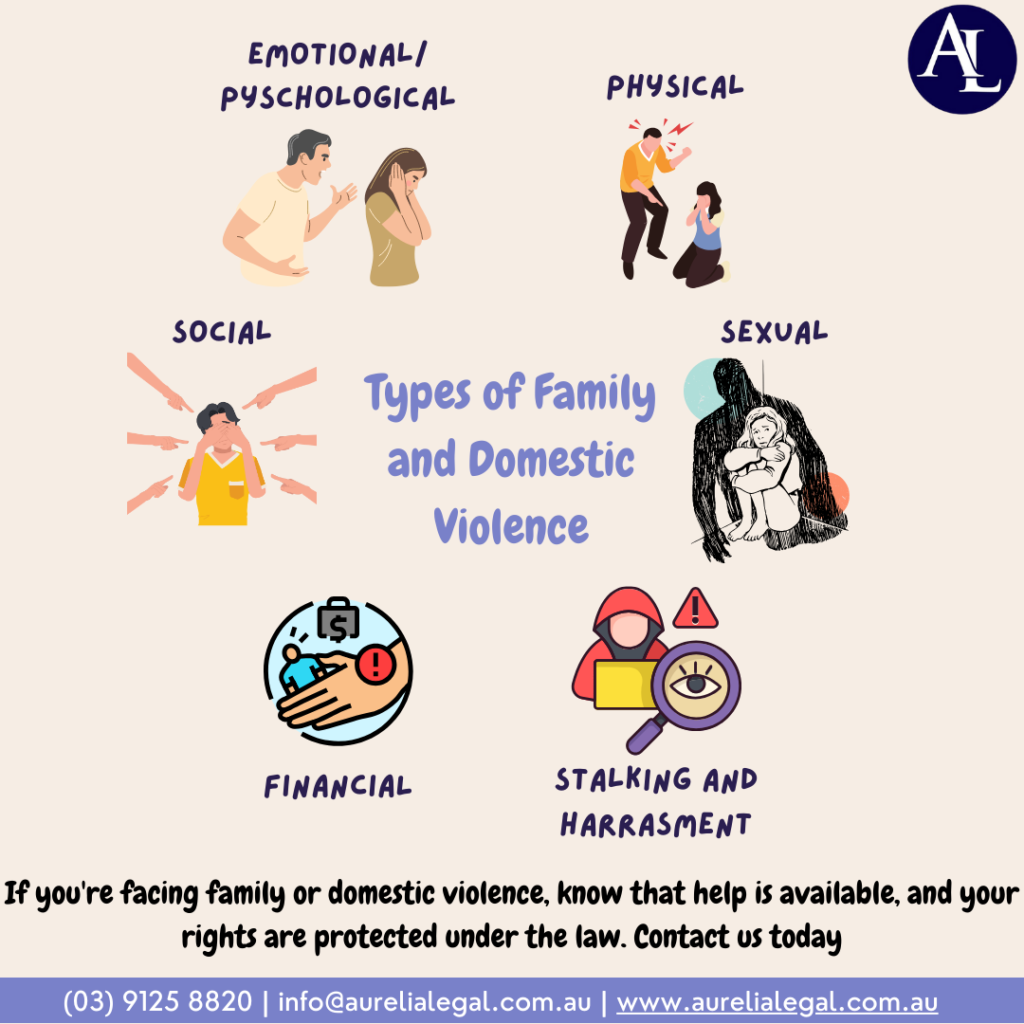
Types of Family and Domestic Violence
Family and domestic violence are not limited to physical harm; they encompass a range of abusive behaviours, including:
- Physical Abuse: Any form of physical harm, including hitting, slapping, or using weapons.
- Emotional/Psychological Abuse: Includes controlling behaviour, verbal insults, threats, or manipulation designed to undermine the victim’s self-esteem and sense of independence.
- Sexual Abuse: Forcing a person to engage in sexual activity against their will, or engaging in any sexual contact without consent.
- Financial Abuse: Controlling a person’s access to money or financial resources, preventing them from gaining financial independence.
- Social Abuse: Isolating a person from family, friends, or their community to increase dependency on the abuser.
- Stalking and Harassment: Repeated, unwanted contact or monitoring that causes fear and distress.
How Australian Law Interprets Family and Domestic Violence
Australian law takes family and domestic violence seriously, especially in the context of partner visas. Both the Migration Act 1958 and the Family Law Act 1975 provide frameworks to address and respond to allegations of violence within a family setting.
In the context of partner visas, a claim of family violence can affect the outcome of the visa process. Specifically, if a relationship breaks down due to family violence, the visa applicant may still be able to secure their visa. Australian immigration law recognises the unique vulnerabilities of victims and offers protections under the family violence provisions of the Migration Regulations.
These provisions allow an applicant who has experienced family violence to continue their visa application even if their relationship with the sponsor has ended. Importantly, the violence must be substantiated through evidence, such as statutory declarations from relevant professionals or court orders.
Disclaimer: There is a new instrument in place that prevents dependents of applicants on other visas from family and domestic violence. you can check the latest instrument here.
The Importance of Evidence in Family Violence Claims for Visa Applications
When family or domestic violence is claimed in a partner visa application, the applicant must provide credible evidence. This can include:
- Police reports or court orders related to the violence.
- Medical records detailing injuries or emotional harm caused by the violence.
- Sworn statements or statutory declarations from professionals such as social workers, doctors, or counsellors.
It is crucial to gather as much evidence as possible, as this will be pivotal in the immigration authorities’ decision-making process.
Why Understanding These Terms Matters
For individuals applying for a partner visa, understanding the definitions and nuances of family and domestic violence is essential. If a relationship breaks down due to abuse, the victim has legal protections that may allow them to continue their visa application independently of their partner.
Moreover, recognising the different forms of abuse helps victims identify when they are in a harmful situation, enabling them to seek help sooner. Family and domestic violence are not always physical; they can manifest as emotional manipulation, financial control, or social isolation, all of which are equally damaging.
Conclusion
These terms, while often used interchangeably, have distinct definitions under Australian law. Understanding these terms is critical for visa applicants, especially those facing abusive relationships. Through the provisions, Australia offers protections to ensure that victims are not trapped in dangerous relationships due to their visa status. If you’re facing violence, know that help is available, and your rights are protected under the law.
Our experienced immigration lawyers can guide you through the provisions, helping you gather the necessary evidence and navigate the legal process. We offer compassionate and confidential support to ensure that your rights are protected and that you have the best chance of securing your visa, even if your relationship has broken down due to violence. Let us assist you in taking the next steps with confidence and peace of mind.
Contact us at +61 3 9125 8820 or info@aurelialegal.com.au
DISCLAIMER: This blog is for general information only. Legislation may change from time to time. Please refer to the latest legislation for current details.